
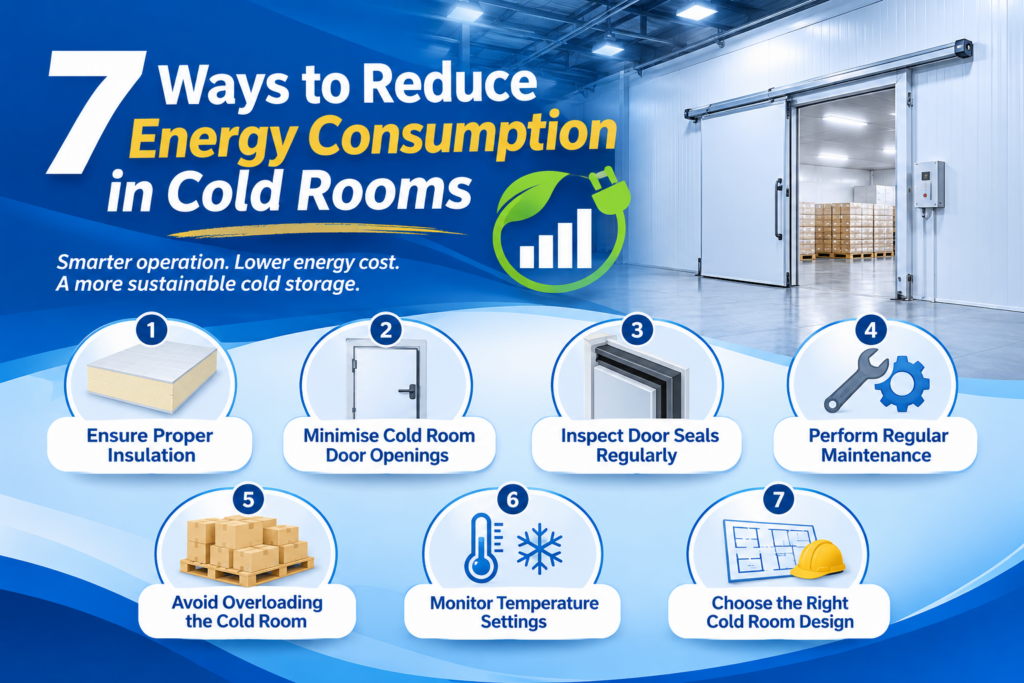
7 Ways to Reduce Energy Consumption in Cold Rooms
Cold rooms play an important role in industries such as food processing, pharmaceuticals, logistics and manufacturing. They provide controlled storage environments to help preserve products, maintain quality and prevent spoilage.
However, operating a cold room requires a continuous supply of energy to maintain the required temperature. Without proper management and maintenance, energy consumption can increase significantly, leading to higher electricity bills and unnecessary operating costs.
The good news is that businesses can improve cold room energy efficiency through proper insulation, regular maintenance and better operating practices.
Here are 7 practical ways to reduce energy consumption in cold rooms without compromising storage conditions.
1. Ensure Proper Cold Room Insulation
Insulation plays a major role in maintaining a stable temperature inside a cold room. Poor insulation allows heat from the surrounding environment to enter the room, forcing the refrigeration system to work harder to maintain the required temperature.
High-quality insulated PU sandwich panels help minimise heat transfer and maintain consistent internal temperatures.
To improve insulation performance:
Inspect panels regularly for visible damage or deterioration.
Check panel joints and connections for potential air gaps.
Ensure proper sealing around wall, ceiling and floor connections.
Use suitable panel thickness according to the cold room application.
Proper insulation helps reduce cooling losses and allows the refrigeration system to operate more efficiently.
2. Minimise Cold Room Door Opening Frequency
Every time a cold room door opens, warm air from the surrounding environment enters while cold air escapes.
Frequent or prolonged door openings increase the temperature inside the room, causing the refrigeration system to work harder to restore the required conditions.
Businesses can minimise unnecessary temperature fluctuations by:
Keeping door opening durations as short as possible.
Planning loading and unloading activities efficiently.
Avoiding unnecessary entry and exit.
Installing suitable cold room doors for the operational requirements.
Educating employees on proper cold room door usage.
For facilities with frequent movement of goods, selecting suitable hinged or sliding cold room doors can help support smoother operations.
3. Inspect Door Seals and Gaskets Regularly
Door seals and gaskets are essential components in preventing unwanted air leakage.
When seals become worn, loose or damaged, warm air can enter the cold room even when the door is fully closed. This creates additional cooling demand and may contribute to condensation or frost formation.
Regularly inspect:
Door gaskets for cracks or tears.
Door frames for gaps or misalignment.
Bottom seals for proper contact with the floor.
Door closing mechanisms to ensure secure closure.
Replacing damaged seals promptly helps maintain proper insulation performance and reduce unnecessary cooling losses.
4. Perform Regular Refrigeration System Maintenance
A refrigeration system that is not properly maintained may consume more electricity to achieve the same cooling performance.
Dust accumulation, blocked condenser coils, incorrect refrigerant levels and faulty components can affect system efficiency.
A regular maintenance schedule should include:
Cleaning condenser and evaporator coils.
Checking refrigerant levels and identifying potential leaks.
Inspecting fans and motors.
Checking electrical connections and controls.
Monitoring operating temperatures and system performance.
Preventive maintenance helps identify potential problems early and reduces the risk of unexpected equipment breakdowns.
5. Avoid Overloading the Cold Room
Overloading a cold room can restrict airflow and affect the distribution of cold air throughout the storage area.
When products are stacked too closely together or placed directly in front of evaporator fans, airflow becomes restricted. This can result in uneven temperatures and longer cooling periods.
To maintain efficient airflow:
Follow recommended storage capacity.
Leave sufficient space between products.
Avoid blocking evaporator fans and air circulation paths.
Organise products to allow proper air movement.
Avoid placing warm products directly into storage without considering the cooling requirements.
Good storage organisation helps maintain consistent temperatures and supports efficient refrigeration operation.
6. Monitor Temperature Settings and Performance
Setting the cold room temperature lower than necessary can increase energy consumption.
Different products have different storage requirements, so businesses should establish suitable temperature settings based on the products being stored and applicable industry requirements.
Consider the following practices:
Set temperatures according to product specifications.
Avoid unnecessarily low temperature settings.
Use reliable temperature monitoring devices.
Check temperature readings regularly.
Investigate unusual temperature fluctuations.
Consistent temperature monitoring helps businesses identify potential inefficiencies before they develop into larger operational problems.
7. Choose the Right Cold Room Design and Components
Energy efficiency starts with proper planning and selecting suitable materials and components.
A well-designed cold room should consider insulation performance, door specifications, room layout, refrigeration capacity and daily operational requirements.
Important considerations include:
Suitable PU sandwich panel thickness.
Proper panel jointing and sealing systems.
Appropriate cold room door specifications.
Efficient airflow and refrigeration system design.
Suitable floor insulation for the application.
Choosing the right materials and components from the beginning can help minimise cooling losses, support reliable operation and reduce unnecessary energy consumption over the long term.
Final Thoughts - Small Improvements Can Make a Difference
Reducing energy consumption in cold rooms does not always require major equipment upgrades. Simple improvements such as maintaining door seals, minimising unnecessary door openings, ensuring proper insulation and carrying out regular maintenance can contribute to better energy efficiency.
For businesses operating cold storage facilities, paying attention to insulation quality, door performance and overall cold room design is an important step towards managing long-term operating costs.
At Teck Chuan Industrial, we specialise in manufacturing cold room solutions, including PU sandwich panels and cold room door systems designed for various industrial applications.
Choosing suitable materials and components is an important part of building a cold room that supports reliable performance and efficient operation.
Looking for suitable cold room panels and door solutions for your facility? Contact Teck Chuan Industrial to explore the available options.